
DivyaSoft Team Jan 30, 2026 5 min read
Short answer
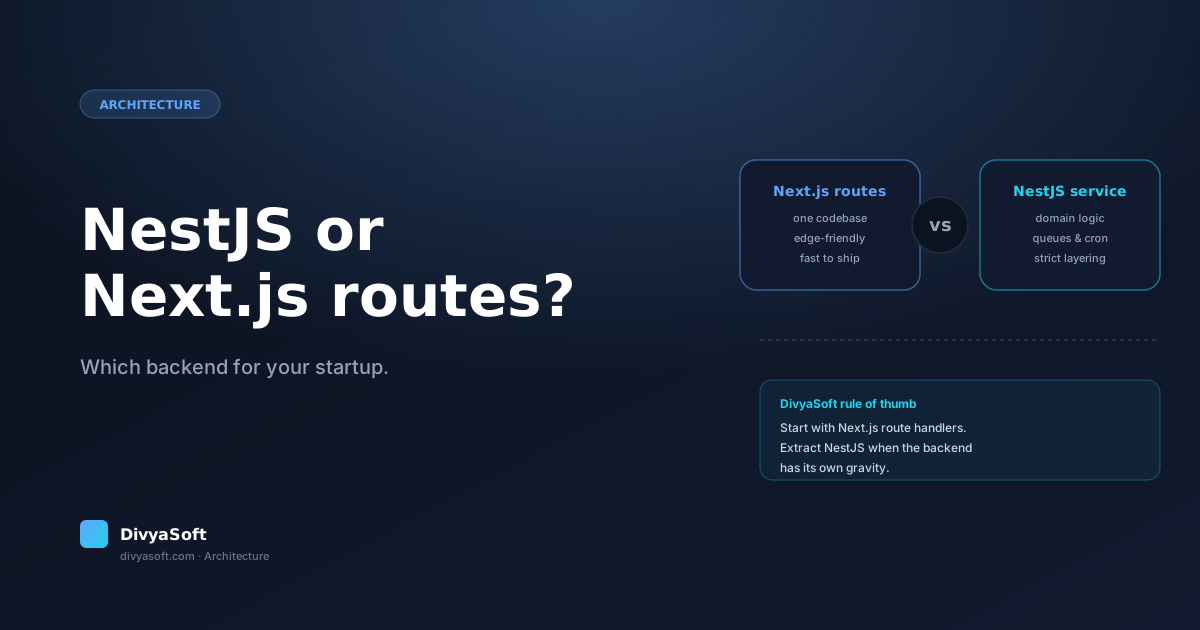
- Next.js route handlers: when the backend is mostly in service of the frontend — auth, form handling, CMS, marketing sites, thin CRUD.
- NestJS: when the backend has its own gravity — domain logic, queues, long-running jobs, multiple consumers, or a separate mobile app.
Signals that push us to NestJS
- More than ~15 distinct domain models
- Background workers (BullMQ), cron jobs, webhooks from many providers
- A mobile app or a partner integration also consumes the API
- You need strict DI, testable modules, and a clear layering discipline
Signals that keep us on Next.js
- One frontend, tight feature loops
- Edge-friendly reads, SSR/ISR-heavy
- Small team, speed of iteration matters more than architectural purity
The boring truth
You can always start with Next.js route handlers and extract a NestJS service later. The reverse — folding a NestJS backend back into a Next.js monolith — is rarer but also fine. Pick the simpler option that doesn't paint you into a corner.
#Architecture#Node.js#NestJS